
Exciting News! We would like to announce that our office is now part of Foot & Ankle Clinics, P.A. We welcome back Dr. Carly Kriedberg to the Edina office starting November 2, 2020. Dr. Moeller continues to see patients one day a week as he continues inching toward retirement. We will be transitioning Dr. Moeller’s patients into Dr. Kriedberg’s schedule and appreciate your patience and understanding in facilitating this transition.
Click here for an important statement on the Coronavirus (COVID-19)Click here for info on the closure of our Chanhassen/Eden Prairie office
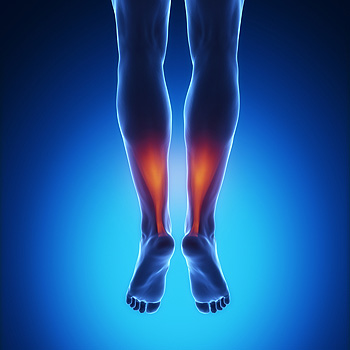 The medical term for the Achilles tendon is the calcaneal tendon. It is located in the back of the leg, and connects the calf muscles to the heel. It is considered to be one of the longest tendons in the body, and is used during walking and running activities. An injury to the Achilles tendon may occur as a result of not warming up adequately before beginning an exercise program. Achilles tendonitis or a rupture can cause severe pain and discomfort. Patients may be susceptible to experiencing this type of injury with existing flat feet or tight calf muscles. There are prevention techniques that can be implemented which may help to reduce the risk of incurring an Achilles tendon injury. These can include stretching before any type of exercise is pursued, in addition to wearing shoes that fit correctly. If you have pain in your heel or if your calf muscles are stiff, please consult with a podiatrist who can properly diagnose and treat Achilles tendon injuries.
Achilles tendon injuries need immediate attention to avoid future complications. If you have any concerns, contact Roy Moeller, DPM of Foot & Ankle Physicians West. Our doctors can provide the care you need to keep you pain-free and on your feet.
What Is the Achilles Tendon?
The Achilles tendon is a tendon that connects the lower leg muscles and calf to the heel of the foot. It is the strongest tendon in the human body and is essential for making movement possible. Because this tendon is such an integral part of the body, any injuries to it can create immense difficulties and should immediately be presented to a doctor.
What Are the Symptoms of an Achilles Tendon Injury?
There are various types of injuries that can affect the Achilles tendon. The two most common injuries are Achilles tendinitis and ruptures of the tendon.
Achilles Tendinitis Symptoms
Rupture Symptoms
Treatment and Prevention
Achilles tendon injuries are diagnosed by a thorough physical evaluation, which can include an MRI. Treatment involves rest, physical therapy, and in some cases, surgery. However, various preventative measures can be taken to avoid these injuries, such as:
If you have any questions please feel free to contact our office located in Edina, MN . We offer the newest diagnostic tools and technology to treat your foot and ankle needs.
Read more about Achilles Tendon Injuries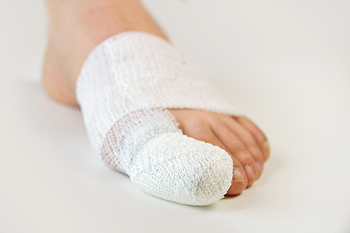
The pain that is experienced with a broken toe can be debilitating. It may be difficult to walk, and any pressure that is exerted on the toe can cause severe pain and discomfort. A common cause of a broken toe is stubbing it against a piece of furniture. Additionally, if a heavy object is dropped on it, the result may be a fractured toe. Symptoms can include bruising of the toe and surrounding areas, and in severe cases, the toe may look deformed. In many cases effective treatment can consist of using a method that is referred to as buddy taping. This consists of taping the affected toe to the toe next to it, and this is often helpful in providing the stability that is necessary as the healing process occurs. If you feel you may have a broken toe, it is suggested that you confer with a podiatrist who can offer you correct treatment options.
Ingrown toenails may initially present themselves as a minor discomfort, but they may progress into an infection in the skin without proper treatment. For more information about ingrown toenails, contact Roy Moeller, DPM of Foot & Ankle Physicians West. Our doctors can provide the care you need to keep you pain-free and on your feet.
Ingrown Toenails
Ingrown toenails are caused when the corner or side of a toenail grows into the soft flesh surrounding it. They often result in redness, swelling, pain, and in some cases, infection. This condition typically affects the big toe and may recur if it is not treated properly.
Causes
You are more likely to develop an ingrown toenail if you are obese, have diabetes, arthritis, or have any fungal infection in your nails. Additionally, people who have foot or toe deformities are at a higher risk of developing an ingrown toenail.
Symptoms
Some symptoms of ingrown toenails are redness, swelling, and pain. In rare cases, there may be a yellowish drainage coming from the nail.
Treatment
Ignoring an ingrown toenail can have serious complications. Infections of the nail border can progress to a deeper soft-tissue infection, which can then turn into a bone infection. You should always speak with your podiatrist if you suspect you have an ingrown toenail, especially if you have diabetes or poor circulation.
If you have any questions, please feel free to contact our office located in Edina, MN . We offer the newest diagnostic and treatment technologies for all your foot care needs.
Read more about Ingrown Toenail Care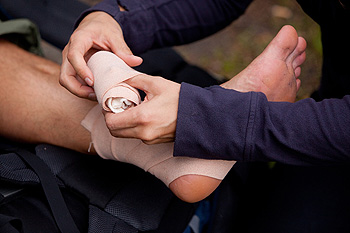 An ankle sprain is one of the most common sports injuries that occurs when ligaments that keep the ankle stable are damaged. Ankle sprains are commonly caused by a twist of the ankle, and athletes whose sports require frequent changes of direction are at a higher risk. Athletes who have previously sprained their ankle or are returning to action too soon are also at risk. When an ankle sprains, swelling and bruising will occur quickly, and a podiatrist will likely need to take an X-ray to make sure that the ankle isn’t broken. Most simple ankle sprains are treated with ice and support like a wrap, brace or walking boot. Crutches may be needed as well, in order to keep weight off of the injured ankle. If you believe you have sprained your ankle, make sure to consult with a podiatrist for proper treatment. A podiatrist will also be able to make sure that there are not more extensive injuries, and they can provide help to prevent future ankle sprains.
Although ankle sprains are common, they aren’t always minor injuries. If you need your ankle injury looked at, contact Roy Moeller, DPM from Foot & Ankle Physicians West. Our doctors can provide the care you need to keep you pain-free and on your feet.
How Does an Ankle Sprain Occur?
Ankle sprains are the result of a tear in the ligaments within the ankle. These injuries may happen when you make a rapid shifting movement while your foot is planted. A less common way to sprain your ankle is when your ankle rolls inward while your foot turns outward.
What Are the Symptoms?
Preventing a Sprain
Treatment of a Sprain
In many cases, the RICE method (Rest, Ice, Compression, and Elevate) is used to treat ankle sprains. However, you should see a podiatrist to see which treatment option would work best with your injury. In severe cases, surgery may be required.
It is important to ask your doctor about rehab options after you receive treatment for your injury. Stretching, strength training, and balance exercises may help the ankle heal while also preventing further injury.
If you have any questions, please feel free to contact our office located in Edina, MN . We offer the newest diagnostic and treatment technologies for all your foot care needs.
Read more about Ankle Sprains
Gout is a painful, inflammatory form of arthritis. Those affected will typically feel an intense stiffness in the joints of their feet, particularly in the big toe. Schedule a visit to learn about how gout can be managed and treated.
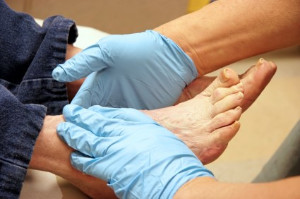 Patients who are diabetic may be fearful of losing a toe or foot due to their condition. Foot complications can occur as a result of elevated blood sugar levels and can cause the feet to feel numb or minimal sensation. This may lead to the inability to feel existing cuts or bruises on the feet, and diabetic ulcers may develop. It is beneficial to implement a daily foot care routine. This can consist of washing the feet every day, properly trimming the toenails, and maintaining steady blood circulation. It is helpful to smooth corns and calluses by utilizing a pumice stone, and this can aid in preventing foot infections from developing. If you have diabetes, it is strongly suggested that you are under the care of a podiatrist who can guide you toward proper management techniques.
Diabetic foot care is important in preventing foot ailments such as ulcers. If you are suffering from diabetes or have any other concerns about your feet, contact Roy Moeller, DPM from Foot & Ankle Physicians West. Our doctors can provide the care you need to keep you pain-free and on your feet.
Diabetic Foot Care
Diabetes affects millions of people every year. The condition can damage blood vessels in many parts of the body, especially the feet. Because of this, taking care of your feet is essential if you have diabetes, and having a podiatrist help monitor your foot health is highly recommended.
The Importance of Caring for Your Feet
Patients with diabetes should have their doctor monitor their blood levels, as blood sugar levels play such a huge role in diabetic care. Monitoring these levels on a regular basis is highly advised.
It is always best to inform your healthcare professional of any concerns you may have regarding your feet, especially for diabetic patients. Early treatment and routine foot examinations are keys to maintaining proper health, especially because severe complications can arise if proper treatment is not applied.
If you have any questions please feel free to contact our office located in Edina, MN . We offer the newest diagnostic and treatment technologies for all your foot and ankle needs.
Read more about Diabetic Foot Conditions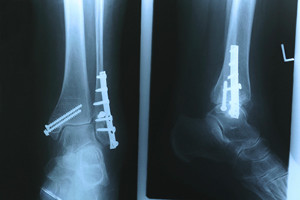 A common reason a broken foot may occur can be from falling off of a ladder, or it may become injured from participating in sporting events. The bones that are located between the toes and the ankle are referred to as the metatarsals. They can be prone to stress fractures, which typically happen from overuse. The average healing time for a broken foot is generally six to twelve weeks. Many daily activities are able to be completed as the healing process occurs when a walking boot or cast is worn. For more severe fractures, it may take longer if surgery is required. If you have pain in your feet as a result of either a fall or something else, it is advised that you consult with a podiatrist.
A broken foot requires immediate medical attention and treatment. If you need your feet checked, contact Roy Moeller, DPM from Foot & Ankle Physicians West. Our doctors can provide the care you need to keep you pain-free and on your feet.
Broken Foot Causes, Symptoms, and Treatment
A broken foot is caused by one of the bones in the foot typically breaking when bended, crushed, or stretched beyond its natural capabilities. Usually the location of the fracture indicates how the break occurred, whether it was through an object, fall, or any other type of injury.
Common Symptoms of Broken Feet:
Those that suspect they have a broken foot shoot seek urgent medical attention where a medical professional could diagnose the severity.
Treatment for broken bones varies depending on the cause, severity and location. Some will require the use of splints, casts or crutches while others could even involve surgery to repair the broken bones. Personal care includes the use of ice and keeping the foot stabilized and elevated.
If you have any questions please feel free to contact our office located in Edina, MN . We offer the newest diagnostic and treatment technologies for all your foot and ankle needs.
Read more about Causes, Symptoms, and Treatment for a Broken Foot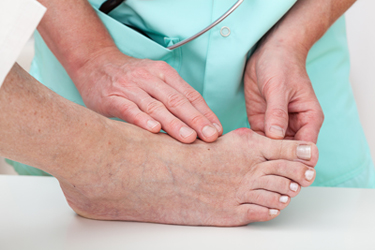 A bump that extends on the side of the big toe may indicate a bunion. It is considered to be a deformity, and a common cause can be from wearing shoes that do not have adequate room for the toes to move freely in. Additionally, genetics can play a significant role in developing a bunion. Mild relief may be found when larger shoes are purchased, and it may help to wear a protective covering over the top of the bunion. In severe cases, orthotics can be prescribed, and therapy techniques may be suggested. If you notice a bony protrusion on the side of the big toe, it may be a bunion, and it is strongly suggested that you seek treatment from a podiatrist.
If you are suffering from bunion pain, contact Roy Moeller, DPM of Foot & Ankle Physicians West. Our doctors can provide the care you need to keep you pain-free and on your feet.
What Is a Bunion?
Bunions are painful bony bumps that usually develop on the inside of the foot at the joint of the big toe. As the deformity increases over time, it may become painful to walk and wear shoes. Women are more likely to exacerbate existing bunions since they often wear tight, narrow shoes that shift their toes together. Bunion pain can be relieved by wearing wider shoes with enough room for the toes.
Causes
Symptoms
In order to diagnose your bunion, your podiatrist may ask about your medical history, symptoms, and general health. Your doctor might also order an x-ray to take a closer look at your feet. Nonsurgical treatment options include orthotics, padding, icing, changes in footwear, and medication. If nonsurgical treatments don’t alleviate your bunion pain, surgery may be necessary.
If you have any questions, please feel free to contact our office located in Edina, MN . We offer the newest diagnostic and treatment technologies for all your foot care needs.
Read more about Bunions A corn is an area of skin that develops in a circular shape and is often found on the bottom of the foot or between the toes. It typically forms as a result of excess friction that can come from wearing shoes that do not fit correctly. Additionally, a corn can develop on the inside of the heel from existing medical conditions that can include flat feet. Hard corns can develop on top of the toes or on the sole of the foot. A corn that is found between the toes is referred to as a soft corn and can cause pain and discomfort. Relief may be found when the feet are washed and dried thoroughly, and it may also help to file the corn with a pumice stone. If you have a corn that is hindering daily activities, it is strongly advised that you consult with a podiatrist who can treat this condition properly.
If you have any concerns regarding your feet and ankles, contact Roy Moeller, DPM of Foot & Ankle Physicians West. Our doctors will treat your foot and ankle needs.
Corns: What Are They? and How Do You Get Rid of Them?
Corns can be described as areas of the skin that have thickened to the point of becoming painful or irritating. They are often layers and layers of the skin that have become dry and rough, and are normally smaller than calluses.
Ways to Prevent Corns
There are many ways to get rid of painful corns such as wearing:
Treating Corns
Treatment of corns involves removing the dead skin that has built up in the specific area of the foot. Consult with Our doctors to determine the best treatment option for your case of corns.
If you have any questions please feel free to contact our office located in Edina, MN . We offer the newest diagnostic and treatment technologies for all your foot and ankle needs.
Read more about Corns: What Are They, and How Do You Get Rid of Them
Have you noticed a bony protrusion on the side of your big toe? If so, you may have developed the foot condition known as a bunion. Don't let bunions interfere with your daily activities.
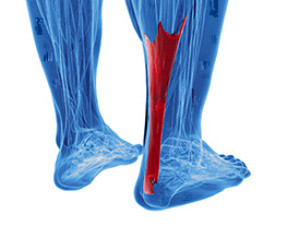 The Achilles tendon connects the heel to the calf muscles. It is located in the back of the leg, near the foot, and is responsible for the ability to point and flex the foot. An injury can cause the Achilles tendon to become ruptured or injured, and this generally causes severe pain and discomfort. Some of the symptoms that many patients can experience include sharp pain at the time of the injury, bruising, swelling, and it is often difficult to walk. This type of injury can happen as a result of participating in running and jumping movements, or if a new activity begins suddenly. Effective treatments can include wearing a brace or cast as the healing process occurs, and in severe tears, surgery may be necessary. If you have pain in your calf, it is strongly advised that you speak to a podiatrist as quickly as possible who can treat an Achilles tendon injury.
Achilles tendon injuries need immediate attention to avoid future complications. If you have any concerns, contact Roy Moeller, DPM of Foot & Ankle Physicians West. Our doctors can provide the care you need to keep you pain-free and on your feet.
What Is the Achilles Tendon?
The Achilles tendon is a tendon that connects the lower leg muscles and calf to the heel of the foot. It is the strongest tendon in the human body and is essential for making movement possible. Because this tendon is such an integral part of the body, any injuries to it can create immense difficulties and should immediately be presented to a doctor.
What Are the Symptoms of an Achilles Tendon Injury?
There are various types of injuries that can affect the Achilles tendon. The two most common injuries are Achilles tendinitis and ruptures of the tendon.
Achilles Tendinitis Symptoms
Rupture Symptoms
Treatment and Prevention
Achilles tendon injuries are diagnosed by a thorough physical evaluation, which can include an MRI. Treatment involves rest, physical therapy, and in some cases, surgery. However, various preventative measures can be taken to avoid these injuries, such as:
If you have any questions please feel free to contact our office located in Edina, MN . We offer the newest diagnostic tools and technology to treat your foot and ankle needs.
Read more about What are Achilles Tendon Injuries