
Exciting News! We would like to announce that our office is now part of Foot & Ankle Clinics, P.A. We welcome back Dr. Carly Kriedberg to the Edina office starting November 2, 2020. Dr. Moeller continues to see patients one day a week as he continues inching toward retirement. We will be transitioning Dr. Moeller’s patients into Dr. Kriedberg’s schedule and appreciate your patience and understanding in facilitating this transition.
Click here for an important statement on the Coronavirus (COVID-19)Click here for info on the closure of our Chanhassen/Eden Prairie office

Custom orthotics, or shoe inserts, should be periodically replaced. Orthotics must fit properly to give you the best results. Protect your feet and ankles!
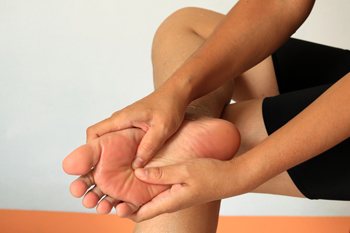 Morton’s neuroma occurs when the nerves in the foot become inflamed. Usually, the nerves that are affected are in the ball of the foot between the 3rd and 4th toes. Signs of Morton’s neuroma include a sharp burning sensation, a lack of feeling, or a tingling in the forefoot area. These symptoms usually show up when pressure is placed on the foot during activities such as walking, standing, running or jumping. Most commonly, Morton’s neuroma is caused by a foot deformity that causes the foot bones to squeeze the nerves. Because of this, footwear that squeezes and constricts the toes can often lead to a neuroma, and a shoe with a wide toe box is suggested for decreasing foot pain. Morton’s neuroma can be treated by a podiatrist. Treatment options that your podiatrist may recommend include orthotics, cortisone injections and, in severe cases, surgery.
Morton’s neuroma is a very uncomfortable condition to live with. If you think you have Morton’s neuroma, contact Roy Moeller, DPM of Foot & Ankle Physicians West. Our doctors will attend to all of your foot care needs and answer any of your related questions.
Morton’s Neuroma
Morton's neuroma is a painful foot condition that commonly affects the areas between the second and third or third and fourth toe, although other areas of the foot are also susceptible. Morton’s neuroma is caused by an inflamed nerve in the foot that is being squeezed and aggravated by surrounding bones.
What Increases the Chances of Having Morton’s Neuroma?
Morton’s neuroma is a very treatable condition. Orthotics and shoe inserts can often be used to alleviate the pain on the forefront of the feet. In more severe cases, corticosteroids can also be prescribed. In order to figure out the best treatment for your neuroma, it’s recommended to seek the care of a podiatrist who can diagnose your condition and provide different treatment options.
If you have any questions, please feel free to contact our office located in Edina, MN . We offer the newest diagnostic and treatment technologies for all your foot care needs.
Read more about Morton's Neuroma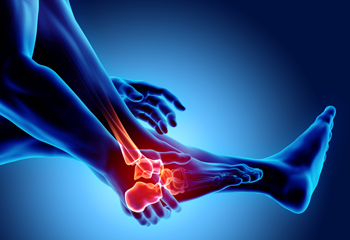 Patients who have arthritic flare ups can experience warm sensations in the joints of the feet. They may also feel tired or ill. It can be difficult to move the affected foot as a result of inflamed joint linings. As the aging process occurs, this condition can be caused by gradual deterioration of the joints while patients complete daily activities. Mild relief may be found when specific stretches and exercises are performed, in addition to taking pain-relieving medication. If you or a loved one has pain and stiffness in the joints of the feet, it is strongly suggested that you consult with a podiatrist who can effectively treat this condition.
Because RA affects more than just your joints, including the joints in your feet and ankles, it is important to seek early diagnosis from your podiatrist if you feel like the pain in your feet might be caused by RA. For more information, contact Roy Moeller, DPM of Foot & Ankle Physicians West. Our doctors will assist you with all of your podiatric concerns.
What Is Rheumatoid Arthritis?
Rheumatoid Arthritis (RA) is an autoimmune disorder in which the body’s own immune system attacks the membranes surrounding the joints. Inflammation of the lining and eventually the destruction of the joint’s cartilage and bone occur, causing severe pain and immobility.
Rheumatoid Arthritis of the Feet
Although RA usually attacks multiple bones and joints throughout the entire body, almost 90 percent of cases result in pain in the foot or ankle area.
Symptoms
Diagnosis
Quick diagnosis of RA in the feet is important so that the podiatrist can treat the area effectively. Your doctor will ask you about your medical history, occupation, and lifestyle to determine the origin of the condition. Rheumatoid Factor tests help to determine if someone is affected by the disease.
If you have any questions please feel free to contact our office located in Edina, MN . We offer the newest diagnostic and treatment technologies for all your foot and ankle needs.
Read more about Rheumatoid Arthritis in the Feet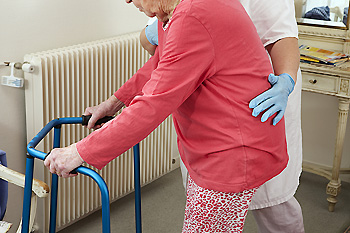 It is common for people to spend more time enjoying the outdoors when the weather is warm. However, falling episodes may not decrease while outside. There are many methods that can be implemented which can help to prevent falling. These can include wearing shoes that have rubber soles and flat heels, which can help to improve traction and stability. Additionally, keeping walkways and stairs free of clutter can help to prevent tripping. Walking with another person can be helpful, as they can assist you if you fall. Falling can affect the feet in numerous ways, and it is suggested that you consult with a podiatrist for more fall prevention techniques.
Preventing falls among the elderly is very important. If you are older and have fallen or fear that you are prone to falling, consult with Roy Moeller, DPM from Foot & Ankle Physicians West. Our doctors will assess your condition and provide you with quality advice and care.
Every 11 seconds, an elderly American is being treated in an emergency room for a fall related injury. Falls are the leading cause of head and hip injuries for those 65 and older. Due to decreases in strength, balance, senses, and lack of awareness, elderly persons are very susceptible to falling. Thankfully, there are a number of things older persons can do to prevent falls.
How to Prevent Falls
Some effective methods that older persons can do to prevent falls include:
Falling can be a traumatic and embarrassing experience for elderly persons; this can make them less willing to leave the house, and less willing to talk to someone about their fears of falling. Doing such things, however, will increase the likelihood of tripping or losing one’s balance. Knowing the causes of falling and how to prevent them is the best way to mitigate the risk of serious injury.
If you have any questions, please feel free to contact our office located in Edina, MN . We offer the newest diagnostic and treatment technologies for all your foot care needs.
Read more about Falls Prevention Running can be a healthy activity that helps with weight loss and staying in shape. Those who are beginning to run for the first time should make sure to have running shoes that fit properly. If you are worried about a past foot or ankle injury, or you want to prevent one in the future, consult with a podiatrist for help. When starting out, ease into running by slowly increasing your pace and distance. Warming up before each run will help increase blood flow and prevent unnecessary stress and fatigue. Cooling down after a run will help bring your heart rate back to normal. As you increase your running activity, keep an eye on any wear and tear that your shoes may experience, because as the shock absorbers in the shoes weaken, the chances of injury increase. If you have any questions in regards to keeping your feet healthy while running, please consult with a podiatrist.
Exercising your feet regularly with the proper foot wear is a great way to prevent injuries. If you have any concerns about your feet, contact Roy Moeller, DPM of Foot & Ankle Physicians West. Our doctors will treat your foot and ankle needs.
How to Prevent Running Injuries
Many common running injuries are caused by overuse and overtraining. When the back of the kneecap starts wearing out and starts causing pain in your knee, this is commonly referred to as runner’s knee. Runner’s knee is a decrease in strength in your quadriceps and can occur if you’re not wearing properly fitted or supporting shoes. To prevent runner’s knee, focusing on hip strengthening is a good idea, as well as strengthening your quads to keep the kneecaps aligned.
What Are Some Causes of Running Injuries?
- One cause of a common running injury is called iliotibial band syndrome.
- Plantar fasciitis is also another common injury.
- Stress fractures can occur from overtraining, lack of calcium, or even your running style.
Best Ways to Prevent Running Injuries
- Wear footwear that fits properly and suits your running needs.
- Running shoes are the only protective gear that runners have to safeguard them from injury.
- Make a training schedule. Adding strengthening exercises as well as regular stretching can help keep you strong and limber and can lessen the possibility of injuries.
- Stretching keeps muscles limber; this will help you gain better flexibility.
If you have any questions please feel free to contact our office located in Edina, MN . We offer the newest diagnostic and treatment technologies for all your foot and ankle needs.
Read more about Preventing Running Injuries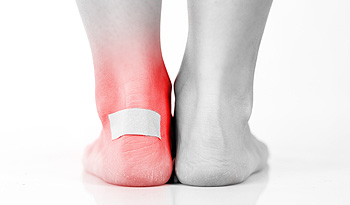 Even though blisters on the feet are the body’s natural reaction to healing damaged skin, they can still cause pain and discomfort. They are defined as a small bubble of protective liquid that forms over the raw skin as the healing process occurs. The blister may remain there for several days, but will gradually drain once new skin has formed. Common reasons why patients develop blisters can include wearing shoes that do not fit correctly, or from medical conditions consisting of eczema, or psoriasis. It is beneficial to wear a covering over the blister as daily activities are completed and this can help prevent the blister from popping prematurely. If you have blisters on your feet please confer with a podiatrist who can offer correct treatment and preventative methods.
Blisters may appear as a single bubble or in a cluster. They can cause a lot of pain and may be filled with pus, blood, or watery serum. If your feet are hurting, contact Roy Moeller, DPM of Foot & Ankle Physicians West. Our doctors can provide the care you need to keep you pain-free and on your feet.
Foot Blisters
Foot blisters are often the result of friction. This happens due to the constant rubbing from shoes, which can lead to pain.
What Are Foot Blisters?
A foot blister is a small fluid-filled pocket that forms on the upper-most layer of the skin. Blisters are filled with clear fluid and can lead to blood drainage or pus if the area becomes infected.
Symptoms
(Blister symptoms may vary depending on what is causing them)
Prevention & Treatment
In order to prevent blisters, you should be sure to wear comfortable shoes with socks that cushion your feet and absorb sweat. Breaking a blister open may increase your chances of developing an infection. However, if your blister breaks, you should wash the area with soap and water immediately and then apply a bandage to the affected area. If your blisters cause severe pain it is important that you call your podiatrist right away.
If you have any questions, please feel free to contact our office located in Edina, MN . We offer the newest diagnostic and treatment technologies for all your foot care needs.
Read more about Blisters on the Feet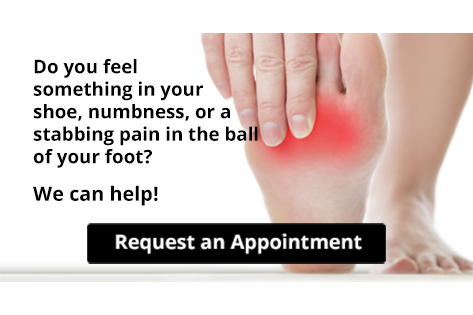
Suffering from this type of pain? You may have the foot condition known as Morton's neuroma. Morton's neuroma may develop as a result of ill-fitting footwear and existing foot deformities. We can help.
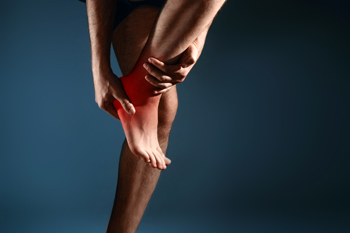 People who enjoy running and jogging need to be especially aware of the different types of foot pain that can be endured. Plantar fasciitis is a common foot condition that can gradually develop from running over long periods of time. It generally produces heel and arch pain, and in severe cases, it may become difficult to walk. Stress fractures often occur in the metatarsals, and are considered to be hairline cracks in the bones. This can happen from increasing speed and distance too fast, and running must be stopped as the healing process occurs. Extensor tendonitis is a painful condition that may be caused by wearing shoes that do not fit correctly, or it may come from having a weak or tight Achilles tendon. If you have any type of foot pain, it is strongly suggested that you schedule an appointment with a podiatrist who can provide a proper diagnosis and guide you towards various treatment techniques.
Foot Pain
Foot pain can be extremely painful and debilitating. If you have a foot pain, consult with Roy Moeller, DPM from Foot & Ankle Physicians West. Our doctors will assess your condition and provide you with quality foot and ankle treatment.
Causes
Foot pain is a very broad condition that could be caused by one or more ailments. The most common include:
Diagnosis
To figure out the cause of foot pain, podiatrists utilize several different methods. This can range from simple visual inspections and sensation tests to X-rays and MRI scans. Prior medical history, family medical history, and any recent physical traumatic events will all be taken into consideration for a proper diagnosis.
Treatment
Treatment depends upon the cause of the foot pain. Whether it is resting, staying off the foot, or having surgery; podiatrists have a number of treatment options available for foot pain.
If you have any questions, please feel free to contact our office located in Edina, MN . We offer the newest diagnostic and treatment technologies for all your foot care needs.
Read more about Foot Pain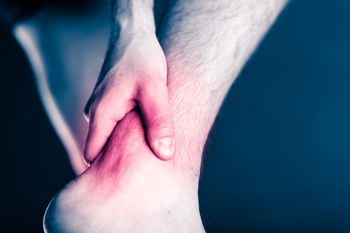
The tarsal tunnel is a narrow space located on the side of the ankle, near the ankle bones. Inside of the tarsal tunnel are arteries, veins, tendons, and nerves, including the posterior tibial nerve. Tarsal tunnel syndrome occurs when the posterior tibial nerve becomes compressed or squeezed. The symptoms of tarsal tunnel syndrome include tingling, burning, or electrical shock sensations, numbness, and pain along the inside of the ankle and the bottom of the foot. Symptoms can appear suddenly, and are often brought on or worsened by overuse of the foot. Left untreated, tarsal tunnel syndrome can progress and lead to permanent nerve damage. If you are experiencing any symptoms of tarsal tunnel syndrome, it is recommended that you see a podiatrist for diagnosis and treatment.
Tarsal tunnel syndrome can be very uncomfortable to live with. If you are experiencing tarsal tunnel syndrome, contact Roy Moeller, DPM of Foot & Ankle Physicians West. Our doctors can provide the care you need to keep you pain-free and on your feet.
Tarsal Tunnel Syndrome
Tarsal tunnel syndrome, which can also be called tibial nerve dysfunction, is an uncommon condition of misfiring peripheral nerves in the foot. The tibial nerve is the peripheral nerve in the leg responsible for sensation and movement of the foot and calf muscles. In tarsal tunnel syndrome, the tibial nerve is damaged, causing problems with movement and feeling in the foot of the affected leg.
Common Cause of Tarsal Tunnel Syndrome
The Effects of Tarsal Tunnel Syndrome
A physical exam of the leg can help identify the presence of tarsal tunnel syndrome. Medical tests, such as a nerve biopsy, are also used to diagnose the condition. Patients may receive physical therapy and prescriptive medication. In extreme cases, some may require surgery.
If you have any questions please feel free to contact our office located in Edina, MN . We offer the newest diagnostic and treatment technologies for all your foot and ankle needs.
Read more about Treating Tarsal Tunnel Syndrome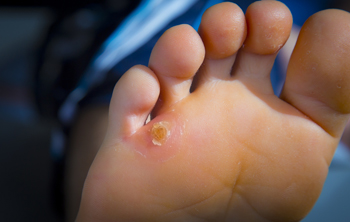 Corns and calluses occur due to friction or pressure on the feet. While calluses are usually asymptomatic and cover a broader area of skin, corns are deeper, more focused and more painful. Corns are usually pea-sized, have a plug, and extend deep into the surface of the skin. Calluses tend to stay closer to the surface, without a plug. Treatment options for both include manual removal, cushioning the affected area, and adjusting biomechanics, such as changing your shoes. Patients who frequently have issues with corns and calluses should consult with a podiatrist for proper preventative measures and various treatment options.
Corns can make walking very painful and should be treated immediately. If you have questions regarding your feet and ankles, contact Roy Moeller, DPM of Foot & Ankle Physicians West. Our doctors will treat your foot and ankle needs.
Corns: What Are They? And How Do You Get Rid of Them?
Corns are thickened areas on the skin that can become painful. They are caused by excessive pressure and friction on the skin. Corns press into the deeper layers of the skin and are usually round in shape.
Ways to Prevent Corns
There are many ways to get rid of painful corns such as:
Treating Corns
Although most corns slowly disappear when the friction or pressure stops, this isn’t always the case. Consult with your podiatrist to determine the best treatment option for your case of corns.
If you have any questions please feel free to contact our office located in Edina, MN . We offer the newest diagnostic and treatment technologies for all your foot and ankle needs.
Read more about Understanding Corns and Calluses