
Exciting News! We would like to announce that our office is now part of Foot & Ankle Clinics, P.A. We welcome back Dr. Carly Kriedberg to the Edina office starting November 2, 2020. Dr. Moeller continues to see patients one day a week as he continues inching toward retirement. We will be transitioning Dr. Moeller’s patients into Dr. Kriedberg’s schedule and appreciate your patience and understanding in facilitating this transition.
Click here for an important statement on the Coronavirus (COVID-19)Click here for info on the closure of our Chanhassen/Eden Prairie office

Taking care of our feet will help you to stay active and mobile throughout your lifetime. One of the best paths to healthy feet is to wear good shoes that fit well, are supportive, and have plenty of room in the toe box and proper cushioning on the sole and heel. Maintaining a healthy weight is also very important. Carrying around extra weight puts undue stress on your feet and ankles can increase our chances of developing conditions like diabetes, which can further compromise the health of your feet. Good old-fashioned hygiene is another basic element in maintaining optimum foot health. Feet should be kept clean, dry and moisturized, and fresh socks should be worn every day. Toenails need to be trimmed straight across and kept around 1-2 mm (0.04” to 0.08”) long. Trimming toenails too short might allow them to grow into the skin. Also, to prevent getting a cut or fungal infection, you should avoid going barefoot in public, especially in communal shower areas and other wet spaces open to the public. A podiatrist can also offer additional advice and professional care throughout your lifetime to keep your feet healthy and functional.
Everyday foot care is very important to prevent infection and other foot ailments. If you need your feet checked, contact Roy Moeller, DPM from Foot & Ankle Physicians West. Our doctors can provide the care you need to keep you pain-free and on your feet.
Everyday Foot Care
Often, people take care of their bodies, face and hair more so than they do for their feet. But the feet are a very important aspect of our bodies, and one that we should pay more attention to. Without our feet, we would not be able to perform most daily tasks.
It is best to check your feet regularly to make sure there are no new bruises or cuts that you may not have noticed before. For dry feet, moisturizer can easily be a remedy and can be applied as often as necessary to the affected areas. Wearing shoes that fit well can also help you maintain good foot health, as well as making it easier to walk and do daily activities without the stress or pain of ill-fitting shoes, high heels, or even flip flops. Wearing clean socks with closed shoes is important to ensure that sweat and bacteria do not accumulate within the shoe. Clean socks help to prevent Athlete’s foot, fungi problems, bad odors, and can absorb sweat.
If you have any questions please feel free to contact our office located in Edina, MN . We offer the newest diagnostic and treatment technologies for all your foot and ankle needs.
Read more about Everyday Foot Care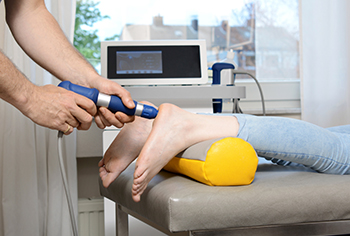
In Extracorporeal Shock Wave Therapy (ESWT), a handheld device sends a series of acoustic pulses through the surface of the skin to an area of damaged tissue. This intense energy creates a microtrauma in the injured tissue, causing the body to respond by increasing blood circulation and metabolism. This accelerates the body’s natural healing response, helps the body to produce new cells, and reduces pain. Shockwave therapy is a non-invasive treatment with minimal side effects. The treatments only take a couple of minutes and are usually administered once a week for 3-4 weeks or more, depending on the level of damage/pain and how long it has been present. Shockwave therapy can be very effective in the treatment of plantar fasciitis, Achilles tendinopathy, and more. Contact your podiatrist to see if your condition may be treated with ESWT.
Shockwave therapy is a treatment commonly used to treat various injuries and conditions, particularly plantar fasciitis in the feet. To learn more, consult with Roy Moeller, DPM from Foot & Ankle Physicians West. Our doctors can provide the care you need to keep you pain-free and on your feet.
Shockwave Therapy
Shockwave therapy is a new treatment option designed to treat bone conditions such as tennis elbow, shoulder pain, and others. Shockwave therapy uses high intensity sound waves that are directed to the affected tissues of the body with pinpoint accuracy. The effects are very beneficial, leading to a production of collagen fibers, eliminating inflammation.
Who Benefits from Shockwave?
Shockwave is recommended for patients suffering from heel pain and associated problems. Heel pain is a common condition which can be caused by obesity, overexertion, and spending a substantial amount of time on hard floors with your feet exposed and unsupported.
Fast and Easy
The therapy is actually a simple process that can leave patients feeling better the very next day. Shockwave therapy is not as dramatic as it sounds. It enables more blood flow to effected areas, addressing the source of the problem and allowing treatment to last for a long time.
Treatment & Recovery Time
Shockwave treatment will enable your feet to recover quickly. This is especially important since surgery is not required. It is cost effective and does not require the use of anesthesia. This treatment is a better option to surgery, since it is proven safe.
If you have any questions, please feel free to contact our office located in Edina, MN . We offer the newest diagnostic and treatment technologies for all your foot and ankle needs.
Read more about Shockwave Therapy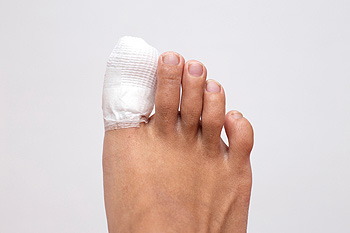
Fractures in the toes and metatarsals (long bones in the midfoot that connect to the toe bones) can be quite painful and should not be taken lightly. Breaks can either be traumatic (acute) that occur instantly due to an injury, or can be stress fractures which develop over time. Traumatic fractures can cause a bone to become misaligned in certain cases. You may hear a snap at the moment of impact and you may even notice that the toe is crooked or misshapen in some way. Pain may be felt at the site of the injury, and bruising and swelling may occur the following day. With a stress fracture, any pain felt while using the affected foot may subside when you rest, and although you may notice swelling there should be no apparent bruising. It is important to see a podiatrist for any broken bone in your toe or metatarsal, even if you have been treated initially at an emergency room. Proper treatment and rehabilitation will help avoid future complications like an improperly healed bone, mobility issues, difficulty wearing shoes, deformities, chronic pain, or arthritis in the joint.
Broken toes may cause a lot of pain and should be treated as soon as possible. If you have any concerns about your feet, contact Roy Moeller, DPM from Foot & Ankle Physicians West. Our doctors will treat your foot and ankle needs.
What Is a Broken Toe?
A broken toe occurs when one or more of the toe bones of the foot are broken after an injury. Injuries such as stubbing your toe or dropping a heavy object on it may cause a toe fracture.
Symptoms of a Broken Toe
Although the injured toe should be monitored daily, it is especially important to have a podiatrist look at your toe if you have severe symptoms. Some of these symptoms include worsening or new pain that is not relieved with medication, sores, redness, or open wounds near the toe.
If you have any questions, please feel free to contact our office located in Edina, MN . We offer the newest diagnostic and treatment technologies for all your foot care needs.
Read more about What to Know About a Broken Toe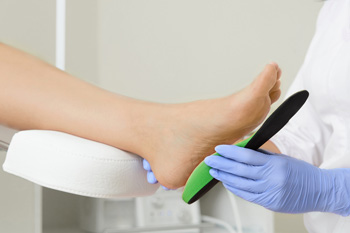 Shoe inserts that are designed to relieve pain caused by various foot conditions are known as orthotics. Common foot conditions treated by orthotics may include corns and calluses, tendonitis, bunions, heel pain, and stress fractures. Orthotics can also help non-foot related issues such as correcting posture and alignment. Orthotics come in a variety of types, including custom made ones, cushioned ones that absorb shock, and pressure relieving orthotics that distribute body weight across the sole of the foot. A podiatrist will consider many factors when prescribing orthotics, which include any existing foot conditions, the structure of the foot, biomechanics, and the patient’s lifestyle. If you believe that orthotics are right for you, a podiatrist will be able to help point you in the right direction.
If you are having discomfort in your feet and would like to try orthotics, contact Roy Moeller, DPM from Foot & Ankle Physicians West. Our doctors can provide the care you need to keep you pain-free and on your feet.
What Are Orthotics?
Orthotics are inserts you can place into your shoes to help with a variety of foot problems such as flat feet or foot pain. Orthotics provide relief and comfort for minor foot and heel pain but can’t correct serious biomechanical problems in your feet.
Over-the-Counter Inserts
Orthotics come in a wide variety of over-the-counter inserts that are used to treat foot pain, heel pain, and minor problems. For example, arch supports can be inserted into your shoes to help correct overarched or flat feet, while gel insoles are often used because they provide comfort and relief from foot and heel pain by alleviating pressure.
Prescription Orthotics
If over-the-counter inserts don’t work for you or if you have a more severe foot concern, it is possible to have your podiatrist prescribe custom orthotics. These high-quality inserts are designed to treat problems such as abnormal motion, plantar fasciitis, and severe forms of heel pain. They can even be used to help patients suffering from diabetes by treating foot ulcers and painful calluses and are usually molded to your feet individually, which allows them to provide full support and comfort.
If you are experiencing minor to severe foot or heel pain, it’s recommended to speak with your podiatrist about the possibilities of using orthotics. A podiatrist can determine which type of orthotic is right for you and allow you to take the first steps towards being pain-free.
If you have any questions please contact our office located in Edina, MN . We offer the newest diagnostic and treatment technologies for all your foot and ankle needs.
Read more about Ankle Foot Orthotics for Athletes
Suffering from this type of pain? You may have the foot condition known as Morton's neuroma. Morton's neuroma may develop as a result of ill-fitting footwear and existing foot deformities. We can help.
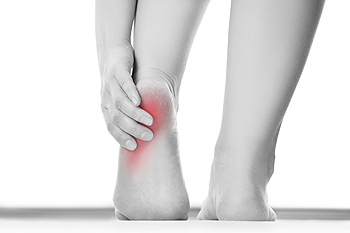
Most heel pain is caused by a local condition occurring in the foot. The most common type of heel pain is due to plantar fasciitis—an inflammation of the long band of tissue running along the bottom of the foot, connecting the toes with the heel. Anyone can have plantar fasciitis. However, athletes and people who are obese or have diabetes, flat feet, or who wear worn out shoes, are more susceptible to developing this painful condition. Heel spurs may often occur along with plantar fasciitis because the strain on the heel bone which causes plantar fasciitis can also lead to calcium deposits forming on the bone (heel spurs). When the bursa sac at the back of the heel becomes irritated and inflamed, this is known as bursitis. A condition called “pump bump” also affects the back of the heel when pressure from wearing pumps causes a painful, bony growth to develop. Podiatrists are very experienced in treating these forms of heel pain and more, so if you experience any heel discomfort, make an appointment today.
Many people suffer from bouts of heel pain. For more information, contact Roy Moeller, DPM of Foot & Ankle Physicians West. Our doctors can provide the care you need to keep you pain-free and on your feet.
Causes of Heel Pain
Heel pain is often associated with plantar fasciitis. The plantar fascia is a band of tissues that extends along the bottom of the foot. A rip or tear in this ligament can cause inflammation of the tissue.
Achilles tendonitis is another cause of heel pain. Inflammation of the Achilles tendon will cause pain from fractures and muscle tearing. Lack of flexibility is also another symptom.
Heel spurs are another cause of pain. When the tissues of the plantar fascia undergo a great deal of stress, it can lead to ligament separation from the heel bone, causing heel spurs.
Why Might Heel Pain Occur?
Treatments
Heel pain should be treated as soon as possible for immediate results. Keeping your feet in a stress-free environment will help. If you suffer from Achilles tendonitis or plantar fasciitis, applying ice will reduce the swelling. Stretching before an exercise like running will help the muscles. Using all these tips will help make heel pain a condition of the past.
If you have any questions please contact our office located in Edina, MN . We offer the newest diagnostic and treatment technologies for all your foot and ankle needs.
Read more about Heel Pain
If you’ve ever stepped off a curb or jumped and landed awkwardly, you may have felt your ankle twist. Sometimes, an ankle can twist so much that the ligaments that support the ankle become overstretched or torn. When this happens, it is known as an ankle sprain. Ankle sprains range in severity, but symptoms usually include ankle pain, tenderness, swelling, and bruising. The more damaged the ligaments, the worse the symptoms. In more severe sprains, it may be difficult or impossible to walk due to ankle pain and instability. The ankle may also have a restricted range of motion. If you suspect that you have sprained your ankle, it is suggested that you seek the care of a podiatrist as soon as possible.
Although ankle sprains are common, they aren’t always minor injuries. If you need your ankle injury looked at, contact Roy Moeller, DPM from Foot & Ankle Physicians West. Our doctors can provide the care you need to keep you pain-free and on your feet.
How Does an Ankle Sprain Occur?
Ankle sprains are the result of a tear in the ligaments within the ankle. These injuries may happen when you make a rapid shifting movement while your foot is planted. A less common way to sprain your ankle is when your ankle rolls inward while your foot turns outward.
What Are the Symptoms?
Preventing a Sprain
Treatment of a Sprain
In many cases, the RICE method (Rest, Ice, Compression, and Elevate) is used to treat ankle sprains. However, you should see a podiatrist to see which treatment option would work best with your injury. In severe cases, surgery may be required.
It is important to ask your doctor about rehab options after you receive treatment for your injury. Stretching, strength training, and balance exercises may help the ankle heal while also preventing further injury.
If you have any questions, please feel free to contact our office located in Edina, MN . We offer the newest diagnostic and treatment technologies for all your foot care needs.
Read more about Ankle Sprains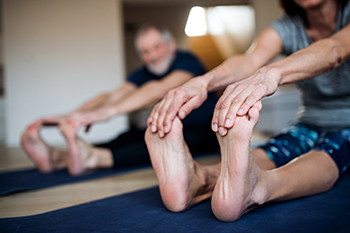
The calf muscles are located at the back of the lower leg and are responsible for the way our feet and ankles move. Tight calf muscles can affect the position of the foot, impacting motion and balance. Regularly stretching the calf muscles helps reduce lower limb pain, tightness, and instability. To get the best results from calf stretches, it is important to hold the stretch for at least 30 seconds. This gives the muscles enough time to stretch out. You should also repeat each calf stretch three times for maximum benefits. Calf stretches can be uncomfortable, but should not be painful. Stop stretching if the mild discomfort associated with stretching turns into pain. Finally, stay safe by consulting with your podiatrist prior to beginning any new stretching or exercise regimen.
Stretching the feet is a great way to prevent injuries. If you have any concerns with your feet consult with Roy Moeller, DPM from Foot & Ankle Physicians West. Our doctors will assess your condition and provide you with quality foot and ankle treatment.
Stretching the Feet
Being the backbone of the body, the feet carry your entire weight and can easily become overexerted, causing cramps and pain. As with any body part, stretching your feet can serve many benefits. From increasing flexibility to even providing some pain relief, be sure to give your feet a stretch from time to time. This is especially important for athletes or anyone performing aerobic exercises, but anyone experiencing foot pain or is on their feet constantly should also engage in this practice.
Great ways to stretch your feet:
Individuals who tend to their feet by regular stretching every day should be able to minimize foot pain and prevent new problems from arising.
If you have any questions, please feel free to contact our office located in Edina, MN . We offer the newest diagnostic and treatment technologies for all your foot care needs.
Read more about Stretching Your Feet
While cracked heels can be unsightly, they are not merely a cosmetic concern. In some cases, the cracks in the skin can become so deep that they cause pain, bleed, and become infected. To avoid this, it is important to moisturize your feet on a regular basis, especially if you notice dry skin. You may want to first soak your feet and gently buff away dry skin with a pumice stone. Then, apply a moisturizer and put on socks to help seal in the moisture. If home treatment doesn’t help reduce dryness and prevent painful cracks, then it is strongly suggested that you seek the care of a podiatrist. You should also see a podiatrist for care if you are diabetic or have a compromised immune system, as these conditions can lead to serious foot complications.
If the skin on your feet starts to crack, you may want to see a podiatrist to find treatment. If you have any concerns, contact Roy Moeller, DPM from Foot & Ankle Physicians West. Our doctors can provide the care you need to keep you pain-free and on your feet.
Cracked Heels
It is important to moisturize your cracked heels in order to prevent pain, bleeding, and infection. The reason cracked heels form is because the skin on the foot is too dry to support the immense pressure placed on them. When the foot expands, the dry skin on the foot begins to split.
Ways to Help Heal Them
Ways to Prevent Cracked Heels
If you are unsure how to proceed in treating cracked heels, seek guidance from a podiatrist. Your doctor will help you with any questions or information you may need.
If you have any questions, please feel free to contact our office located in Edina, MN . We offer the newest diagnostic and treatment technologies for all your foot care needs.
Read more about Solutions for Cracked Heels
Have your child's feet been examined lately? Healthy feet are happy feet. If your child is complaining of foot pain, it may be a sign of underlying problems.